Search Intent in SEO: How to Create Content People Actually Want
Finding the right keywords is an important part of SEO, but keywords alone are not enough.
Imagine someone searches for “SEO for small businesses.” They might want to learn what SEO is, find practical tips, compare SEO services, or look for someone who can help their business.
The words are the same, but the reason behind the search can be different.
That reason is called search intent.
Understanding search intent helps you create content that matches what people actually want to find. Instead of writing an article simply because a keyword has search volume, you can create something that answers the real question behind the search.
What Is Search Intent?
Search intent is the reason why someone enters a particular query into a search engine.
When people search online, they usually have something they want to know, find, compare, or do.
For example:
“What is SEO?”
The person probably wants information.
“Best SEO tools for beginners”
The person may be comparing different options.
“SEO services in Kannur”
The person may be looking for a service.
Understanding this difference can help you choose the right type of content.
Why Is Search Intent Important for SEO?
SEO should not be about getting a page to rank for a keyword and stopping there.
If your content does not satisfy what the searcher wants, people may leave the page quickly or continue searching for another result.
Good SEO content should answer the searcher’s question clearly and provide useful information.
When the content matches the intent, visitors are more likely to:
- Stay on the page
- Read more
- Explore other pages
- Trust the information
- Contact the business
- Take the desired action
This is why understanding search intent should be part of your content planning process.
The Main Types of Search Intent
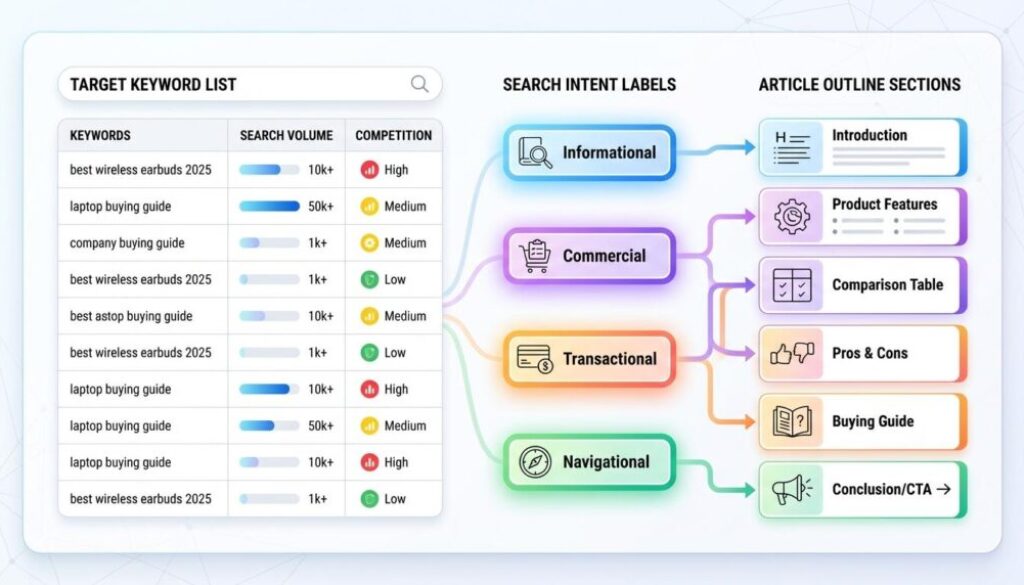
Search intent can generally be divided into four main types:
- Informational intent
- Navigational intent
- Commercial investigation
- Transactional intent
Let’s look at each one.
1. Informational Search Intent
Informational searches happen when someone wants to learn something.
Examples include:
- What is digital marketing?
- What is SEO?
- How does keyword research work?
- How to improve website ranking?
- What is Local SEO?
For these searches, people usually want explanations, guides, tutorials, or answers.
A detailed blog post can work well for this type of intent.
For example, your article “Keyword Research for Beginners: How to Find the Right Keywords” is primarily informational because it teaches readers about keyword research.
2. Navigational Search Intent
A navigational search happens when someone is trying to find a particular website, brand, or page.
Examples:
- Google Search Console
- Instagram login
- Canva
- OpenTutor Digital Academy
The person already knows where they want to go.
For this type of search, a user usually does not need a long educational article. They want to reach the specific website or page quickly.
3. Commercial Search Intent
Commercial searches happen when someone is researching before making a decision.
They may be comparing products, services, tools, or providers.
Examples:
- Best SEO tools for small businesses
- Best digital marketing agency in Kannur
- SEO agency vs freelancer
- Best social media marketing tools
The person may not be ready to buy immediately, but they are considering their options.
Comparison articles, reviews, guides, and detailed service information can work well for these searches.
4. Transactional Search Intent
Transactional searches usually show stronger intent to take action.
Examples:
- Buy SEO software
- Hire SEO expert
- Digital marketing services in Kannur
- SEO services near me
The person is looking for a way to complete an action.
For these searches, a service page, product page, contact page, or landing page may be more appropriate than a general educational blog.
How to Identify Search Intent
You do not always have to guess what people want.
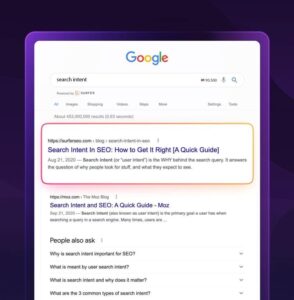
One simple way to understand search intent is to search for the keyword yourself.
Look at the pages that appear in the search results.
Ask:
What type of content is Google showing?
Are the results mostly:
- Blog posts?
- Tutorials?
- Service pages?
- Product pages?
- Comparison articles?
- Videos?
- Location-based results?
The results can give you a strong indication of what users are expecting.
Search Intent and Content Type
Your keyword and content format should work together.
| Search Intent | Example Search | Suitable Content |
|---|---|---|
| Informational | What is SEO? | Blog / Guide |
| Navigational | Google Search Console | Website / Tool page |
| Commercial | Best SEO tools | Comparison / Review |
| Transactional | SEO services in Kannur | Service page |
This does not mean every search follows one fixed pattern. But it gives you a useful starting point when planning content.
Don’t Write Content Just for Keywords
This is where many beginners go wrong.
They find a keyword and immediately start writing an article around it.
But before writing, ask:
What does the person searching this keyword actually need?
Suppose your keyword is:
“digital marketing strategist in Kannur.”
Someone searching this phrase may not want a beginner’s guide to digital marketing.
They may want to find a professional who provides digital marketing strategy services in Kannur.
In that case, a well-structured service or portfolio page could be more appropriate than a general blog.
This is an important distinction.
The keyword tells you what people search. Search intent helps you understand why they search it.
How Search Intent Helps Small Businesses
Search intent can be particularly useful for small businesses because it helps them avoid creating unnecessary content.
Instead of publishing ten articles on random topics, a business can focus on questions and searches that are relevant to its customers.
For example, a small business could create:
- Educational blogs for informational searches
- Comparison content for commercial searches
- Service pages for transactional searches
- Location pages for local searches
This creates a more useful website structure.
Search Intent for Local SEO
Local searches often include a location or have a clear local purpose.
For example:
SEO services in Kannur
digital marketing strategist in Kannur
social media marketing in Kannur
These searches can indicate that the person is looking for a service provider in a particular area.
For local businesses, this makes it important to create content that clearly explains:
- What you offer
- Where you provide the service
- Who you help
- How people can contact you
- Why your service may be suitable for them
As a Digital Marketing Strategist in Kannur, understanding local search intent is especially important when planning content for businesses that want to reach customers in a specific area.
Common Search Intent Mistakes
Targeting the Wrong Content Type
If people are looking for a service and you create only a general informational article, the page may not satisfy their needs.
Ignoring the Search Results
The existing results can provide useful clues about what searchers expect.
Focusing Only on Search Volume
A keyword with high search volume is not automatically valuable if the search intent does not match your business.
Trying to Rank One Page for Everything
Different searches may require different pages.
A blog, service page, product page, and location page can each have a different purpose.
How to Use Search Intent in Your Content Strategy
Before writing your next article, follow this simple process:
Choose a topic → Find relevant keywords → Understand search intent → Check the search results → Choose the right content format → Create useful content → Optimize the page → Measure performance
This approach makes keyword research much more meaningful.
You are not simply asking:
“What keyword should I use?”
You are asking:
“What does someone need when they search this?”
That is a much better question.
Final Thoughts
Good SEO starts with understanding people.
Keywords help you discover what people are searching for, while search intent helps you understand what they expect to find.
When these two work together, your content becomes more relevant and useful.
Before creating your next blog post, don’t just choose a keyword and start writing.
Take a moment to search for it.
Look at the results.
Understand the reason behind the search.
Then create content that actually helps the person who searched for it.
That is a much stronger foundation for long-term SEO.