Backlinks in SEO: What They Are and How to Build Quality Backlinks
You have already learned about keyword research, search intent, on-page SEO, technical SEO, and off-page SEO.
Now it’s time to look at one of the most discussed parts of SEO: backlinks.
You may have heard people say, “You need more backlinks to rank.”
But getting backlinks is not simply about collecting as many links as possible.
A better way to think about backlinks is this:
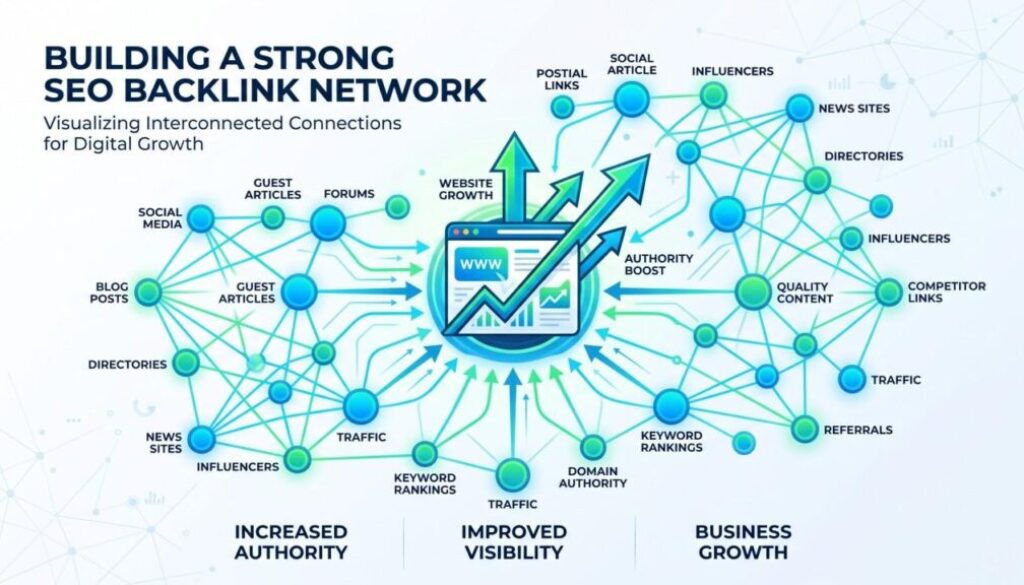
When another relevant website links to your content, it can help people discover your website and can also act as an external signal about your content.
The real challenge is not getting random links. It is building links naturally from relevant and useful sources.
 What Are Backlinks in SEO?
A backlink is a link from one website to another website.
For example, imagine you publish a useful guide about keyword research. Another digital marketing website finds your guide helpful and links to it from one of its articles.
That link pointing to your website is called a backlink.
Backlinks are also known as inbound links or incoming links.
They are an important part of off-page SEO, which we discussed in the previous blog.
Why Are Backlinks Important for SEO?
Search engines use many different signals when evaluating webpages.
Links from other websites can help search engines discover content and understand relationships between websites and topics.
Backlinks can also bring something that SEO alone cannot guarantee: referral traffic.
If a relevant website links to your article and its readers click that link, you can receive visitors directly from that website.
So a useful backlink can provide two benefits:
SEO visibility + potential referral traffic
This is why the quality and relevance of a backlink matter.
Are All Backlinks the Same?
No.
This is one of the most important things to understand about Backlinks in SEO.
A link from a relevant and trustworthy website is not necessarily equivalent to a link from a completely unrelated or low-quality website.
For example, if your website focuses on digital marketing, a link from a relevant marketing or business resource may make much more sense than a link from an unrelated website.
When evaluating a backlink, think about:
- Relevance
- Context
- Quality of the referring website
- Whether the link is naturally placed
- Whether the link can bring useful visitors
Don’t judge a backlink only by its number.
What Makes a Quality Backlink?
There is no single formula that makes a backlink “perfect.”
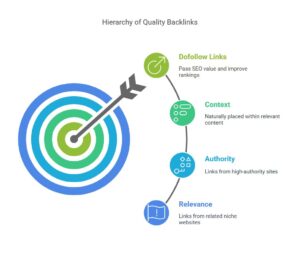
However, a useful backlink usually has a few characteristics.
Relevant
The website linking to you should ideally have some connection to your topic or audience.
Natural
The link should make sense within the content instead of being forced into an unrelated paragraph.
Useful
A reader should have a reason to click the link.
Credible
The referring website should be a genuine website with useful content rather than a site created mainly for manipulating search rankings.
Contextual
A link placed naturally within relevant content can be more meaningful than a random link placed somewhere simply to obtain a backlink.
How to Get Backlinks Naturally
The best place to start is not link building.
It is creating something worth linking to.
Think about what would make another website owner say:
“This resource would be useful for my readers.”
That could be:
- A detailed beginner’s guide
- Original research
- A useful checklist
- A practical case study
- An industry resource
- An infographic
- A data-based article
- A helpful tutorial
- A free resource or template
If your content solves a real problem, people have a genuine reason to reference it.
Create Link-Worthy Content
Not every blog post will naturally attract backlinks.
That’s okay.
Some articles are mainly designed to answer specific search queries. Others can be developed as resources that people may want to reference.
For example, instead of writing:
“5 SEO Tips”
you could create a more useful resource such as:
“A Beginner’s SEO Checklist: 25 Things to Check Before Publishing a Website”
The second type of resource gives other creators something specific to reference.
This doesn’t guarantee backlinks, but it gives your content a stronger reason to earn them.
Guest Posting
Guest posting is another way to build relationships and potentially earn backlinks.
You contribute useful, original content to a relevant website and, when appropriate, link to a related resource on your own website.
The important word here is useful.
Don’t publish the same article on multiple websites just to get links.
Instead:
- Find relevant websites.
- Understand their audience.
- Suggest a useful topic.
- Create original content.
- Add links only where they genuinely help the reader.
Guest posting should be treated as a content and relationship opportunity, not just a backlink shortcut.
Digital PR and Online Mentions
Backlinks can also come from digital PR.
For example, a business, professional, or brand might be mentioned in:
- Online publications
- Industry websites
- Interviews
- Podcasts
- News articles
- Expert roundups
- Online events
If the publication also links to your website, that mention can become a backlink.
For a personal brand, this can be especially useful because it can increase both website visibility and professional recognition.
Broken Link Building
Broken link building is another approach used in SEO.
The basic idea is to find a relevant page containing a broken external link and suggest a useful replacement resource.
For example:
A website has an old article about SEO.
One of its external links no longer works.
You have a relevant, useful article that could help their readers.
You can contact the website owner and let them know about the broken link while suggesting your resource as a possible replacement.
The key is relevance and usefulness.
Don’t contact websites with completely unrelated content simply because they have broken links.
Promote Your Content
Sometimes, good content simply needs to be discovered.
After publishing an article, you can share it through relevant channels such as:
- Professional communities
- Industry groups
- Email newsletters
- Online discussions
For example, after publishing a detailed SEO article, you could share one useful takeaway on LinkedIn and direct interested readers to the complete guide.
More visibility creates more opportunities for people to discover and reference your content.
Backlinks and Personal Branding
Backlinks can also support a professional personal brand.
If you are building your presence as a Digital marketing strategist in Kannur, your website should not be the only place where people can discover your work.
Relevant mentions on professional websites, business publications, educational platforms, or industry communities can help connect your name with your area of work.
For example, your website could be referenced when you:
- Contribute an article
- Share an industry insight
- Participate in an interview
- Work on a relevant collaboration
- Publish useful research or resources
The focus should be on building a genuine professional presence rather than trying to create links everywhere.
Do Social Media Links Count as Backlinks?
Social media can help distribute your content and bring people to your website.
However, social media links should not be treated as a replacement for earning relevant editorial backlinks from websites.
Think of social media as part of your content distribution strategy.
You publish something useful.
You share it with the right audience.
People discover it.
Some may discuss it, share it, or eventually reference it from their own websites.
That’s a more natural way to connect social visibility with link earning.
Common Backlink Mistakes Beginners Should Avoid
Buying Backlinks in Bulk
Buying large quantities of links simply to manipulate search rankings can create SEO risks.
Getting Links From Unrelated Websites
A link from a website with no meaningful connection to your topic may provide little value.
Using Link Farms
Websites created mainly to generate links can be a poor foundation for an SEO strategy.
Excessive Exact-Match Anchor Text
Using the exact same keyword-rich anchor text repeatedly can make your link profile look unnatural.
Comment Spam
Adding your website link to random blog comments or forums is not a sustainable link-building strategy.
Focusing Only on Quantity
Getting 100 random links is not automatically better than earning a few genuinely useful links.
What Is Anchor Text?
Anchor text is the clickable text used for a link.
For example:
Learn more about keyword research for beginners.
Here, “keyword research for beginners” is the anchor text.
Anchor text should normally make sense in the context of the sentence.
You don’t need to force your target keyword into every link.
Natural wording is usually easier for readers to understand.
How to Monitor Your Backlinks
Once your website starts receiving backlinks, it is useful to keep an eye on them.
Tools such as Google Search Console and other SEO platforms can help you understand your website’s link profile.
You can look at:
- Which websites link to your site
- Which pages receive links
- Which content attracts attention
- Whether new links are appearing
- Whether your link profile is changing over time
Don’t panic every time you see an unfamiliar link.
The goal is to understand your overall link profile rather than obsessing over every individual URL.
Backlinks vs Internal Links
These two are easy to confuse.
Internal Links
Internal links connect pages within your own website.
Example:
Blog 5 → Blog 7
Your Keyword Research article links to your On-Page SEO article.
Backlinks
Backlinks come from another website to your website.
Example:
Another SEO website → Your Blog 7
Both are useful, but they serve different purposes.
Your internal linking strategy is something you can control directly.
Backlinks are usually earned from other websites.
A Simple Backlink Strategy for Beginners
If you’re starting from zero, don’t make your first goal “get 100 backlinks.”
Start with a more realistic process.
Step 1: Build Useful Content
Create articles and resources that genuinely help your audience.
Step 2: Improve Your Existing Content
Make sure your important pages are useful, readable, and well-structured.
Step 3: Identify Relevant Websites
Find websites that cover topics related to your content.
Step 4: Build Relationships
Connect with people in your industry instead of immediately asking everyone for a link.
Step 5: Promote Your Best Resources
Share useful content through relevant platforms.
Step 6: Look for Genuine Opportunities
Consider guest contributions, interviews, collaborations, digital PR, and resource mentions.
Step 7: Monitor Your Results
Track your backlinks and referral traffic over time.
This approach is slower than buying a package of hundreds of links, but it is much more aligned with building a real website.
A Simple Backlink Checklist
Before trying to build a backlink, ask:
☐ Is the website relevant to my topic?
☐ Would its readers benefit from my content?
☐ Is the website genuine and useful?
☐ Does the link fit naturally into the content?
☐ Am I creating something worth referencing?
☐ Am I avoiding spammy link-building methods?
☐ Am I focusing on quality rather than quantity?
☐ Can the link potentially bring relevant visitors?
If the answer to most of these questions is yes, you’re thinking about backlinks in the right way.
How Backlinks Fit Into Your SEO Journey
Your SEO learning journey has now moved through several connected stages.
Keyword Research helps you find what people are searching for.
Search Intent helps you understand why they are searching.
On-Page SEO helps you optimize your pages.
Technical SEO helps create a strong technical foundation.
Off-Page SEO introduces the external side of SEO.
And now, Backlinks in SEO gives you a closer look at one of the most important parts of off-page optimization.
The overall process becomes:
Keyword Research → Search Intent → On-Page SEO → Technical SEO → Off-Page SEO → Backlinks → Monitoring & Improvement
This is much more useful than treating every SEO activity as a separate trick.
Final Thoughts
Backlinks can play an important role in SEO, but getting links should not become the entire purpose of your strategy.
The strongest starting point is still useful content.
Create something valuable. Make it easy to understand. Share it with the right audience. Build genuine relationships. Then look for opportunities where your content can naturally earn references from relevant websites.
If you’re building a professional website as a Digital marketing strategist in Kannur, don’t focus only on how many backlinks you have.
Focus on whether the websites linking to you are relevant, whether their audiences could benefit from your content, and whether your overall online presence is becoming stronger.
Good SEO is not about collecting numbers. It’s about building something people find useful enough to trust, visit, and share.